Skip to the main content.

Financial Wellness: What It Is & How to Build It

Money affects more than your bank account, it impacts your daily peace of mind, your stress levels, and even your relationships. When money feels complicated or uncertain, it can weigh heavily on your mental health.

The good news? Financial wellness isn't just about managing money. It's about building simple, repeatable habits that make money feel more manageable and give you the space to focus on what matters most in life.

But for many people, that sense of stability feels out of reach. Nearly half of U.S. adults (42%) with credit card debt say they’re concerned about their payments, according to a recent Happy Money survey, conducted by OnePoll. Of the 42% of respondents who report concern over their credit card payments, nearly half (42%) say this concern has had a direct impact on their mental health, and over a third (34%) say it has disrupted their sleep.

The good news is that there are tangible steps you can take to improve your financial well-being.

The guide below shares what financial wellness means, why it matters for mental health, and practical steps to build a foundation you can feel good about.

What Is Financial Wellness?

Financial wellness is the ongoing practice of managing your money in a way that supports your life and your mental health today and tomorrow. It’s not about hitting a certain income level. It’s about:

  • Covering essentials with less stress
  • Planning for your goals
  • Handling surprises with confidence

Think of money as a tool you can learn to use in a way that supports both your financial and emotional well-being.

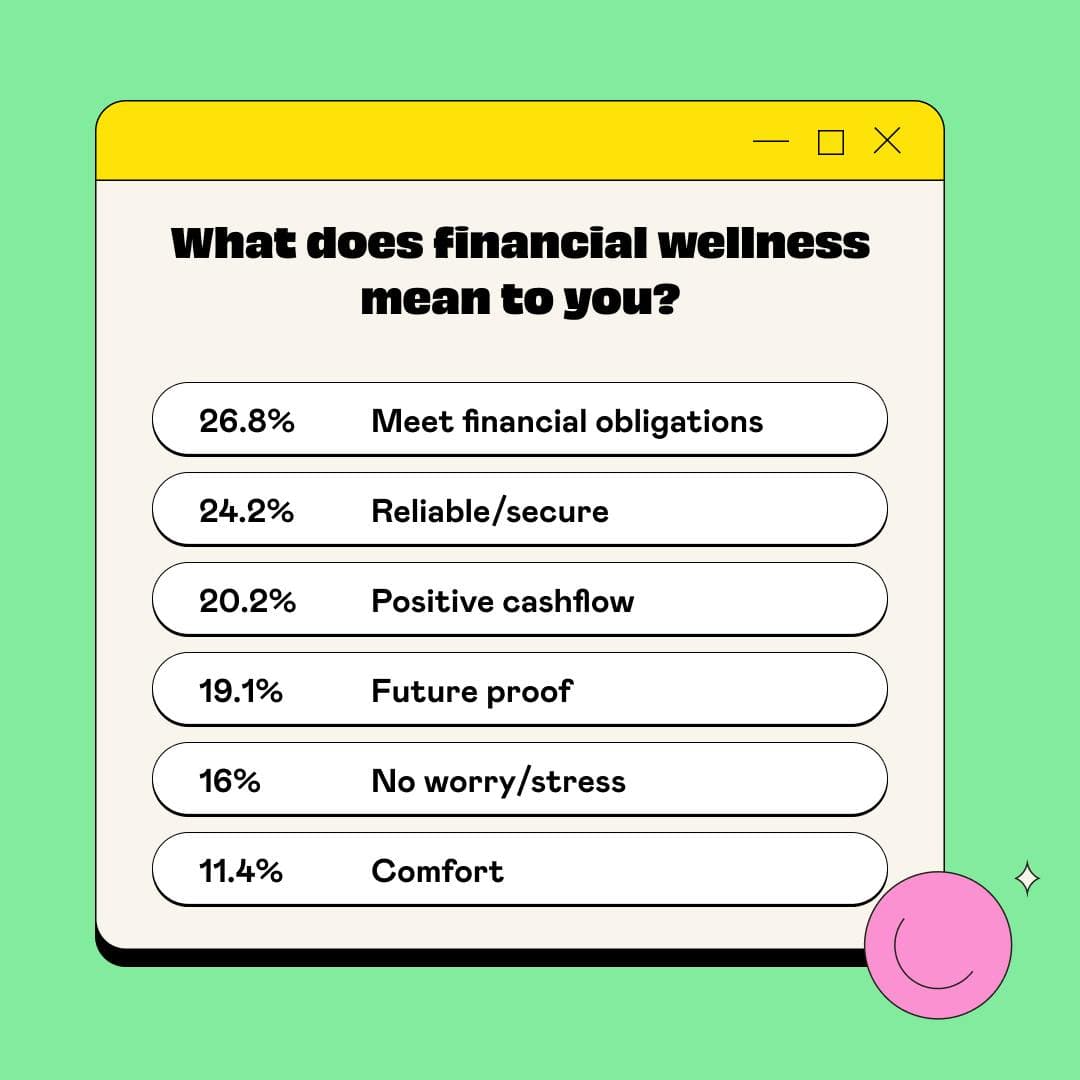
What does financial wellness mean to you survey results 26.8% - Meet financial obligations 24.2% - Reliable/secure 20.2% - Positive cashflow 19.1% - Future proof 16% - No worry/stress 11.4% - Comfort

The Connection Between Financial Wellness & Mental Health

Money and mental health are deeply connected. When finances feel uncertain, stress rises and decision making can feel more difficult. A simple plan and a few structured habits can bring greater calm, clarity, and control. 

aTDgrnNYClf9nyaw_ascending-arrow-orange

42%

of adults with credit card debt report negative mental health impacts

aTDgrXNYClf9nyav_bar-graph

34%

experience anxiety specifically about their debt

Ultimately, building financial wellness isn’t just about the numbers. It’s about reducing stress and supporting your mental well-being so you feel more secure.

Financial Wellness Tips to Reduce Stress

Start small—the goal is progress, not perfection.

Here are a few habits that make a real impact:

aTDiDnNYClf9nya5_dollar-sign

Pay essentials first

Cover housing, utilities, and food before discretionary spending to ensure stability.

aTDiDXNYClf9nya4_refresh-icon

Automate bills and savings

Set up automatic transfers to build your emergency fund without thinking about it.

aTDiDHNYClf9nya3_target

Keep an emergency buffer

Save a small cushion for unexpected expenses to avoid relying on credit.

aTDiDnNYClf9nya5_dollar-sign

Break big debts into goals

Focus on one balance at a time to make progress feel clear and achievable.

aTDiDXNYClf9nya4_refresh-icon

Do a weekly check-in

Review spending and upcoming bills to stay mindful and adjust as needed.

Approaching financial wellness in this way can make it feel more manageable. Pick one habit to start this week. Once it feels like part of your routine, add another.

Signs Money Stress Might Be Affecting You

Stress has a way of sneaking into everyday life.

Your money routine may need some extra care if you notice these stress signals:

  • Trouble sleeping or staying focused
  • Avoiding bills or hesitating to log into financial accounts
  • Feeling tense when making small purchases
  • Putting off financial decisions

Ultimately, building financial wellness isn’t just about the numbers. It’s about reducing stress and supporting your mental well-being so you feel more secure.

Why These Habits Help

These habits support both your financial plan and your peace of mind.. Here’s how:

aTDjXHNYClf9nya9_shield

Lower uncertainty

Clear plans reduce anxiety about the future

aTDjW3NYClf9nya8_ribbon

Create small wins

Celebrating progress builds momentum

aTDjWnNYClf9nya7_eye

Make progress visible

Tracking improvements reinforces positive behavior

As things become more predictable, stress tends to ease. And with less stress, it’s easier to stay consistent with your plan.

Understanding Financial Wellness (The Four Levers)

Financial wellness isn’t just a buzzword, it’s a skill you can build. Think of it as a simple system with four key levers you can adjust as life changes. The goal? Simplified bills, clear priorities, and fewer money surprises along the way.

These levers keep your approach to financial well-being focused and sustainable:


aTDkbnNYClf9nyb4_light-blue-eye

Visibility

See your income, spending, balances, and due dates clearly.

aTDkbXNYClf9nyb3_light-blue-shield

Stability

Protect essentials first and automate key bills.

aTDkbHNYClf9nyb2_light-blue-refresh

Flexibility

Keep a cushion for surprises and align spending to priorities.

aTDka3NYClf9nyb1_light-blue-up-arrow

Momentum

Pay down high-interest debt and save regularly toward goals.

Move one lever at a time. Small, consistent adjustments build confidence.

Quick Self-Check + Progress Indicators

5-Question Financial Wellness Check

  • Are my essential bills getting paid on time?
  • Can I tell where my money went over the past week?
  • Do I have a small emergency cushion set aside?
  • Have I written down money goals with clear amounts?
  • Do I take a few minutes each month to review my plan?

Simple Signs You're Making Progress

  • On-Time Payments: Most bills are paid by the due date.
  • Weekly Money Check: You’ve looked back at last week’s spending.
  • Emergency Cushion: Your savings balance is growing gradually.
  • Debt Direction: High-interest balances are shrinking month by month.

If you answered “no” more than once, that’s okay; it just shows you where to focus first. Pick the area that feels like the biggest gap and start there. One step at a time is enough. Check in once a month. If something slips, don’t stress — just make small adjustments and keep going.

Build a Strong Financial Foundation

A strong foundation keeps your financial life steady. Build small, achievable habits that make money feel less stressful and your goals feel more attainable.

Create a Budget That Fits Your Life

Pick one budgeting method that feels simple, not overwhelming.

As a good starting point:

aTMWGnNYClf9n3t6_blue-1

Assessment

Write down your take-home pay.

aTMWGXNYClf9n3t5_blue-2

Tracking

List your must-pay bills.

aTMWGHNYClf9n3t4_blue-3

Essentials

Set a weekly spending limit for flexible costs like food, gas, and fun.

Check in once a week to see how things look, move money if you need to, and tweak limits if they don’t fit. A budget works best when it’s quick to update and easy to follow.

aTR8fXNYClf9n4be_blue-arrow-up

Keep It Going: Weekly Rhythm

Keep the routine light. Do one 10-minute review each week to confirm bills are on track, spending fits the plan, and your cushion is growing. Once a month, look at trends like on-time payments, cushion size, and high-interest balances. Small, steady changes build financial well-being.

Financial Habits Take Time & Consistency

Real financial wellness develops over time. Stick with your small habits, celebrate progress, and adjust as life changes. Over weeks and months, you’ll see the benefits:

  • Bills feel more predictable
  • Stress levels decrease
  • Your cushion grows
  • Debt balances shrink

Stay patient with yourself. Remember, financial well-being is about feeling more secure and supported, not about getting everything right all at once.

aThxcHNYClf9n_Fh_Hub_FinancialWell-beingImage1

Frequently Asked Questions


Financial health is the more objective picture of your current money situation (savings, debt, credit score). Financial wellness is broader. It includes how confident and calm you feel about money and whether your habits support long-term goals.

No, you don't need a high income to reach financial wellness. Overall financial wellness comes from habits that work for your situation, like budgeting, paying bills on time, and building a savings cushion that can lower stress at many different income levels.

To start building an emergency fund, start small and build. Begin with your first $50 to $100, then aim for growing your account over time. The goal will be to have at least 3 months of expenses in case of a job loss or other unexpected situations.

List balances and interest rates. Pay minimums on all accounts Then focus extra payments on the highest-interest balance (the avalanche method). Or start with  the smallest balance for quicker wins (the snowball method).

Check once a month. Are bills on time, is your cushion growing, and are high-interest balances trending down? If not, make a small adjustment and review again next month.

Financial Wellness Glossary

The ongoing practice of managing money in a way that supports everyday life, life, long-term goals, and your overall peace of mind and mental well-being.

Financial Wellness

The ongoing practice of managing money in a way that supports everyday life, life, long-term goals, and your overall peace of mind and mental well-being.

High-Interest Debt

Debt with a high annual percentage rate (APR). Paying it down first usually reduces total interest costs.

Emergency Cushion

Savings set aside for unexpected costs. Even $50 to $100 can help reduce stress and protect your cash flow.

Automation

Scheduled transfers or payments that run on their own. Automation takes the guesswork out of staying consistent.

Cash Flow

The timing of money coming in and going out. When it’s steady, bills get paid on time and money feels easier to manage.

Spending Plan

A simple, flexible budget that sets limits for flexible costs and ensures essentials are covered.

Let's fund your happy

At Happy Money, our mission is to help you feel more in control of your finances – and your life. If you’re looking to eliminate high-interest debt, our credit card debt consolidation personal loan, The Payoff Loan, is a tool that may support your path to financial well-being.

Checking your rate won't impact your credit score