


Skip to the main content.

Personal Loans: Benefits, Risks, and How They Work

Personal loans can be a helpful way to manage debt, cover expenses, or bring big goals within reach. They’re flexible, straightforward, and usually come with a clear payoff plan. But like any tool, they have pros and cons depending on your personal situation.

This guide breaks down how personal loans work, what they cost, and how to decide if one fits your financial plan, so you can make financial choices with confidence.

Understanding Personal Loans

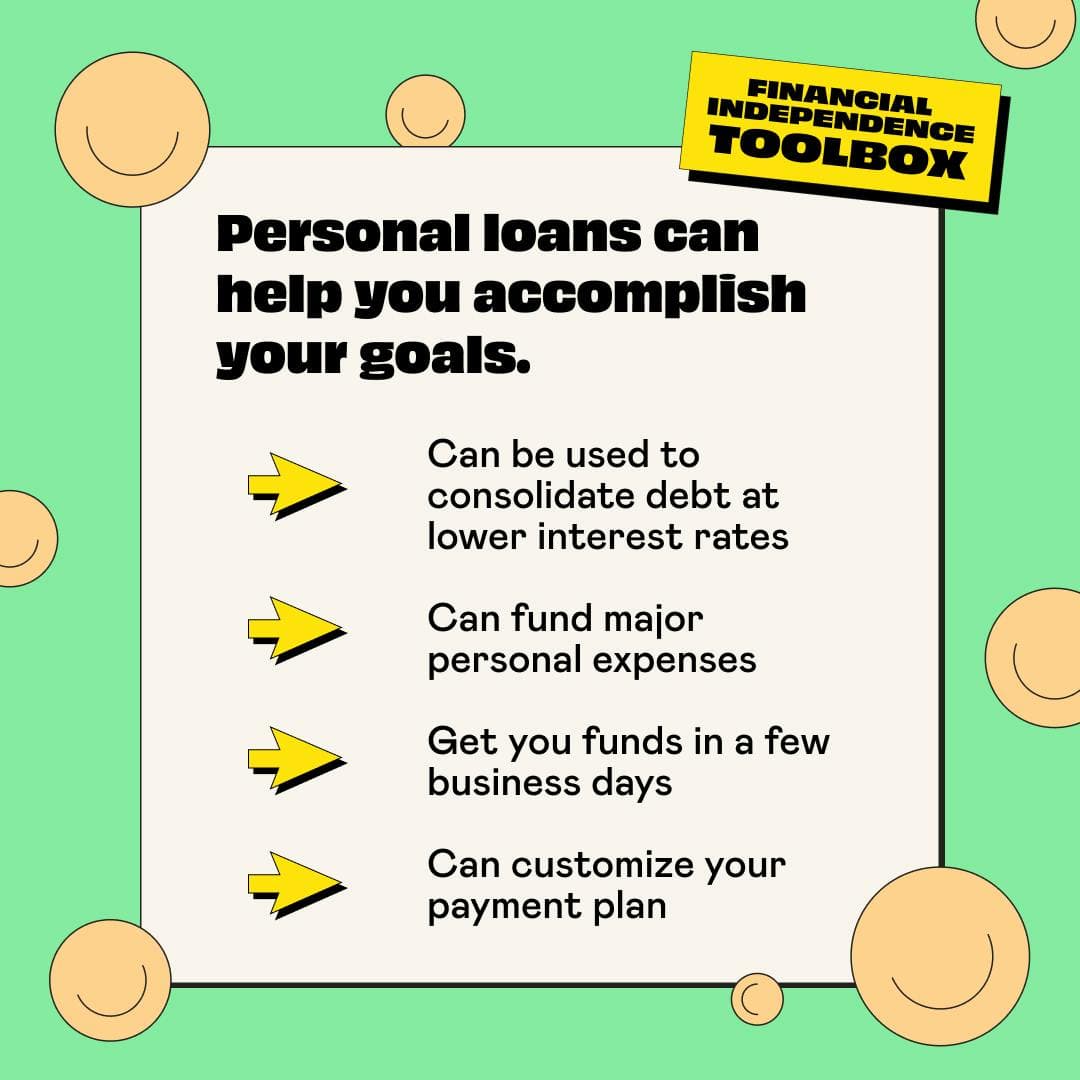
Personal loans provide a flexible financing option for various needs, from debt consolidation to major purchases. They offer fixed rates and predictable payments, making budgeting easier.

Personal loans can be beneficial, but they're not one-size-fits-all. Knowing the pros and cons can help you steer clear of common mistakes. This page is meant to share information, not financial advice.

aTSJ-HNYClf9n4cs_SVG

Key Takeaways

  • Personal loans come in two forms: secured (backed by collateral) and unsecured (no collateral). We explain the differences and considerations in this guide.
  • The total cost depends on your interest rate, fees, loan term length, and credit profile.

What Is a Personal Loan?

A personal loan is a principal amount you borrow and repay in fixed monthly payments with a fixed interest rate. Unlike credit cards, which revolve and compound interest month over month, personal loans give you a set timeline to pay off the balance. Lenders consider your credit history, income, and existing debt when making an offer.

aV6JanNYClf9o3bk_Hub_PersonalLoanImage-1-

Secured vs Unsecured Personal Loans

Before you compare lenders, it’s important to understand the two types of loan types: unsecured personal loans and secured personal loans.

aTSKS3NYClf9n4cv_unlocked

Unsecured Personal Loans

  • No collateral required
  • Approval based on credit and income
  • Typically faster application process

Unsecured loans don't require assets as backing, making them accessible but often with slightly higher rates for those with less-than-perfect credit.

aTSKSnNYClf9n4cu_locked

Secured Personal Loans

  • Backed by collateral (car, savings, etc.)
  • Potential for larger loans or lower rates
  • Risk of asset loss if unpaid

Secured loans use assets to reduce lender risk, which can mean better terms but comes with the possibility of losing your collateral if you default.

Understanding this tradeoff helps you decide which type matches your situation.

When a Personal Loan Might Help

Personal loans can be useful in a few scenarios if the numbers make sense for your budget:

aTSVknNYClf9n4dn_credit-card

Debt Consolidation

Combine high-interest debts into one payment to save money and reduce stress.

aTSVkXNYClf9n4dm_house

Home Improvements

Pay for repairs or upgrades on a set schedule.

aTSVkHNYClf9n4dl_exclamation

Unexpected Expenses

Handle surprise costs like medical bills or car repairs without draining savings.

aTSVj3NYClf9n4dk_shopping-bag

Major Purchases

Finance a large expense with a defined payoff plan instead of revolving credit.

aTSbY3NYClf9n4ef_Frame

Always compare APR, fees, and term against your budget to understand the true cost of borrowing.

These examples are just starting points. Confirm the APR, fees, and term of your personal loan offer against your budget to make sure the loan supports your plan.

What Lenders Look At

Most lenders review:

aTTAT3NYClf9n4he_SVG-1-

Credit and Payment History

Your track record of repaying debts on time is a key factor in approval and rates.

aTS_63NYClf9n4hb_orangeclock

Debt-to-Income Ratio

Lenders check if your monthly debt payments are manageable relative to your income.

aTS_7HNYClf9n4hc_purpledollar

Income Stability

Steady employment and reliable income sources improve your approval chances.

aTS_6nNYClf9n4ha_doc

Current Financial Obligations

Existing loans and credit commitments affect how much additional debt you can handle.

These factors influence your rate, approval odds, and loan amount.

Costs To Consider

Personal loans aren’t free money–they come with costs to weigh:

aTTBCnNYClf9n4hf_Background-1-

APR

Annual cost of borrowing, which includes interest and certain fees

aTTBDHNYClf9n4hh_Background-2-

Fees

Origination, late, or prepayment penalties

aTTBC3NYClf9n4hg_Background-3-

Term

The length of your loan, which affects both payment size and total cost

Pros and Cons of Personal Loans

Used intentionally, a personal loan can provide structure and predictability to your finances, whether you’re consolidating high-interest balances or funding a necessary expense. But every loan also carries costs and responsibilities worth a closer look before you apply.

Benefits

  • Predictable Path
    Fixed payments and end date help with budgeting
  • Possible Savings
    Lower rates than credit cards for qualified borrowers
  • Simpler Management
    One payment instead of multiple debts
  • Credit Effects
    Can improve credit mix and history when managed well
  • No Collateral
    Unsecured options don't risk assets

Risks

  • Total Cost Overtime
    Interest adds up over time, especially with longer terms
  • Fees
    Origination fees can increase borrowing costs
  • Credit Impact
    Application causes hard inquiry, missed payments can hurt credit score
  • Spending Habits
    Could enable unnecessary spending if not disciplined
  • Collateral Ris (for secured loans)
    Secured loans risk asset loss if payments missed

Rates, APR and Fees

The price of a personal loan depends on three factors: interest rate, APR, and term. Understanding each one helps you compare offers with confidence.

APR vs Interest Rate

Interest Rate

The base cost of borrowing the principal loan amount

APR

Interest rate + fees = annual percentage rate (true cost)

aTSbY3NYClf9n4ef_Frame

Always compare APRs when shopping for loans, not just interest rates.

How Terms Change Payment and Total Cost

Short Term (2-3 years)

  •   Higher monthly payments
  •   Less total interest paid
  •   Debt-free faster

Long Term (5-7 years)

  • Lower monthly payments
  • More total interest paid
  • Longer commitment


Common Fees

origination-fee

Origination Fee

One-time fee for processing the loan, typically 1-8% of loan amount

late-payment-fee

Late Payment Fee

Charged when payment is received after the due date

prepayment-fee

Prepayment Penalty

Some lenders charge fees for paying off loan early (not common with personal loans)

Estimating Your Payment

To see how a personal loan might fit into your budget, plug the loan amount, APR, and term into a calculator. Previewing the monthly payment and total interest gives you a clear picture before you commit.

For instance, The Payoff Loan™, an unsecured personal loan from Happy Money, offers fixed rates as low as 8.95% APR with borrowing limits up to $50K. Once you understand the costs, focus on offers that meet your goals without overextending your budget.

Personal Loans and Your Credit

A personal loan can help or hurt your credit depending on how you manage it.

aTTYpXNYClf9n4iA_Frame-1-

What Can Help

  • Installment payment history
  • Credit mix diversity
  • Lower credit utilization
aTTYpHNYClf9n4h__Frame-2-

What Can Hurt

  • Late or missed payments
  • Hard inquiries during application
  • Running credit card balances back up
aTTYo3NYClf9n4h-_Frame-3-

Practical Steps

  • Choose a loan amount that fits your needs
  • Set up autopay for on-time payments
  • Keep card spending in check
  • Monitor credit reports regularly

Personal Loan FAQs

Checking your rate generates a soft credit inquiry, which doesn't show up on your report and doesn’t impact your score. A hard credit inquiry, which can impact your score initially, occurs only when you accept an offer and the loan is issued. With regular, on-time payments, your credit score can bounce back and improve over time.

Personal loans offer predictable, fixed payments and can be used for many goals, from debt consolidation to major expenses. When the APR and term fit your budget, you may save on interest compared to high-interest debt and simplify your monthly payments.

Start with what you truly need and what you can comfortably repay each month. Consider future expenses or income changes to make sure the loan supports your goals without straining your budget.

Often, yes. If your lender doesn’t charge a prepayment penalty, paying off your loan early can reduce the total interest you pay. With Happy Money, you'll never pay a prepayment fee, so you can pay off your loan early without a penalty.

Your credit score, income, debt-to-income ratio, loan amount, and repayment term all play a role in your personal loan interest rate. Lender fees can also affect APR, which shows the total yearly cost of borrowing.

Most lenders review your credit and payment history, debt-to-income ratio, income stability, and other accounts. To learn more about the factors that influence your approval with Happy Money, check out our Getting Approved page.

It varies by lender. Some can fund a loan as soon as the next business day after approval; others may take a few days depending on the specifics of the applicant.

The majority of personal loans are a fixed rate, meaning your monthly payment stays the same for the life of the loan. The Payoff Loan™ by Happy Money offers you a fixed interest rate.

Terms often range from one to five years. Shorter terms mean higher monthly payments but less total interest; longer terms lower the monthly payment but increase total interest over time. The Payoff Loan™ by Happy Money have flexible terms between 24 and 60 months.

Borrowing limits for personal loans vary by lender and your qualifications, commonly from a few thousand dollars into the tens of thousands, subject to approval.

Some lenders charge an origination fee when the loan is set up. Late payment fees may apply if you miss a due date, and a few lenders charge prepayment penalties. Compare APR, which includes the interest rate and certain fees, to understand the total cost.

Commonly requested documents include a valid ID, proof of income, and a bank account for funding and payments. Requirements vary by lender.

You may incur a late fee if you miss a loan payment. If the payment is more than 30 days late, the missed payment may be reported to the credit bureaus, which can hurt your credit score. Bringing the account current quickly can help limit further impact.

Some lenders allow joint applications or co-borrowers, which can improve eligibility or help you qualify for a better rate, depending on the lender’s policy.

Let's fund your happy

Personal loans to help you reach your goals.

Checking your rate won't impact your credit score